
The recycling industry is entering a new stage. For many years, the main goal of recycling operations was to recover as much material as possible. Today, recovery volume is still important, but material quality is becoming just as critical.
Manufacturers, smelters, and downstream processors increasingly need cleaner and more consistent recycled materials. If recovered scrap contains too much contamination, the material may require additional processing, sell at a lower value, or become unsuitable for higher-grade applications. This creates a growing “scrap quality gap” between low-grade mixed materials and cleaner, higher-value recovered products.
For recycling plants, this trend creates both a challenge and an opportunity. Plants that can improve separation efficiency and produce cleaner material streams will be better positioned in a market where recycled material quality matters more.
Why Scrap Quality Is Becoming More Important
Recycled metals, plastics, and other materials are becoming more important in global manufacturing and circular economy supply chains. However, recycled material must meet certain quality requirements before it can be reused efficiently.
In many recycling operations, incoming materials are complex and unstable. ASR, Zorba, UBC, plastics, glass, IBA, and mixed scrap streams may contain different combinations of ferrous metals, non-ferrous metals, stainless steel, wires, rubber, plastics, glass, ash, dust, and light impurities.
If these materials are not separated properly, several problems may occur:
Valuable metals may be lost in residue
Recovered products may contain too much contamination
Downstream equipment may face higher wear or damage
Manual sorting costs may increase
Product value may decrease
Material buyers may require additional processing
Plant operation may become less stable
The result is simple: poor separation leads to lower material quality, and lower material quality reduces market value.
From Recovery Rate to Product Purity
A good recycling plant should not only focus on how much material is recovered. It should also focus on how clean and usable the recovered material is.
For example, recovering aluminum from mixed scrap is valuable, but aluminum mixed with too much plastic, rubber, ferrous metal, or glass may not achieve the best market value. The same applies to copper, brass, zinc, stainless steel, and plastic recycling streams.
Better product purity can help recycling plants:
Increase the value of recovered materials
Reduce downstream processing costs
Improve buyer confidence
Reduce contamination penalties
Improve operational stability
Support higher-grade recycling applications
This is why complete sorting process design is becoming more important than relying on one single machine.
The Role of Screening in Scrap Quality Improvement
Screening is often the first important step in a recycling sorting line. A TROMMEL screen can separate materials by size and prepare the material stream for downstream separation.
Material size control is important because mixed-size materials can reduce separation accuracy. Oversized pieces may disturb material flow, while fine materials may carry valuable metals into residue. A more controlled size range helps downstream equipment work more efficiently.
TROMMEL screening can help:
Improve feed stability
Separate materials by size
Reduce overload on downstream equipment
Prepare materials for MAGNETic separation
Improve eddy current separation performance
Support better recovery from mixed material streams
For ASR, IBA, glass, plastics, Zorba, and mixed scrap, screening is not only a preparation step. It directly affects the final quality of recovered materials.
Why MAGNETic Separation Comes Before Non-Ferrous Recovery
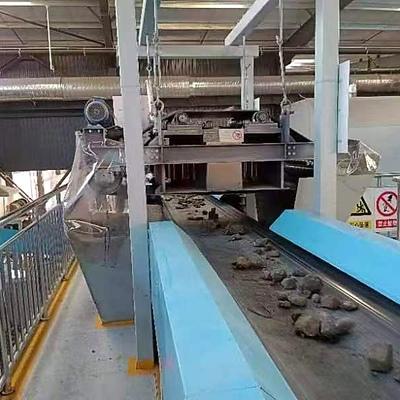
Ferrous metals such as iron and steel are common contaminants in many recycling streams. Before non-ferrous metal recovery, these ferrous metals should usually be removed by a MAGNETIC SEPARATOR.
Magnetic separation helps protect downstream equipment and improves the stability of later separation stages. It also reduces contamination in recovered non-ferrous materials.
Magnetic separation can help:
Remove iron and steel
Protect downstream machines
Reduce equipment wear
Improve material cleanliness
Prepare material for eddy current separation
Create a more stable process flow
For many recycling plants, magnetic separation is a necessary step before eddy current separation.
The Role of Eddy Current Separation
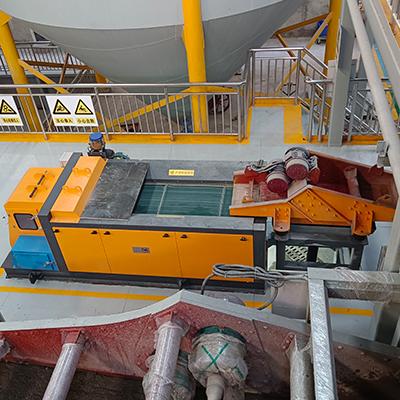
After ferrous metals are removed, eddy current separation can recover conductive non-ferrous metals such as aluminum, copper, brass, and zinc.
An EDDY CURRENT SEPARATOR uses a high-speed magnetic rotor to create a changing magnetic field. When conductive metal particles pass through this field, they are ejected forward into a separate discharge area. Non-conductive materials such as plastics, rubber, glass, and fluff follow a different path.
Eddy current separation is widely used for:
ASR recycling
Zorba separation
UBC recycling
Plastic recycling metal removal
GLASS RECYCLING metal removal
IBA metal recovery
Mixed scrap processing
By recovering more non-ferrous metals and reducing metal loss in residue, eddy current separation plays a key role in improving both recovery rate and material value.
Where AI Sorting Adds Value
As material streams become more complex, some materials may be difficult to separate using mechanical separation alone. AI sorting can help identify materials based on shape, color, texture, and visual characteristics.
AI sorting can be used as a further upgrading step after screening, magnetic separation, and eddy current separation. It can help improve final product quality and reduce manual sorting work.
AI sorting can support:
Material recognition
Quality upgrading
Removal of remaining contaminants
Stainless steel and wire sorting
Complex mixed material separation
Reduction of manual labor
More flexible recycling line operation
However, AI sorting works best when the upstream process is already stable. Proper screening, magnetic separation, and eddy current separation help create a cleaner feed for intelligent sorting.
A Complete Sorting Process for Better Scrap Quality
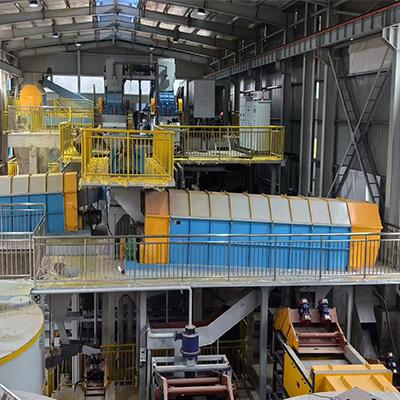
Improving scrap quality usually requires a complete process, not just one machine. A typical recycling sorting line may include:
Feeding system
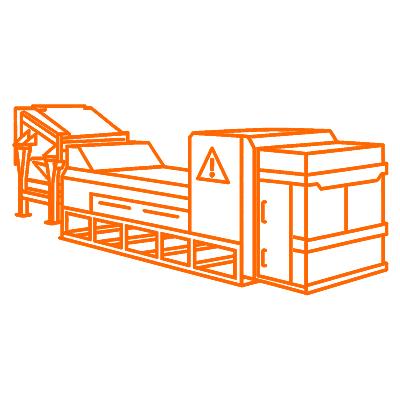
AI separator
Manual quality control
Conveying and discharge systems
Each step has a clear function. Screening controls material size. Magnetic separation removes ferrous metals. Eddy current separation recovers non-ferrous metals. AI sorting can further upgrade final product quality.
When these machines work together, recycling plants can improve recovery rate, reduce contamination, and produce cleaner recovered materials.
Applications Across Recycling Industries
ASR Recycling
Auto shredder residue contains plastics, rubber, foam, glass, textiles, wires, ferrous metals, and non-ferrous metals. A complete sorting process can help recover valuable metals and reduce material loss.
Zorba Separation
Zorba is a mixed non-ferrous metal stream that often requires further upgrading. Screening, magnetic separation, eddy current separation, and AI sorting can help improve aluminum-rich product quality and reduce impurities.
UBC Recycling
Used beverage cans are valuable aluminum materials. Proper separation can help recover clean aluminum and reduce contamination from plastics, paper, and other impurities.
Plastic Recycling
Plastic recycling streams may contain iron, aluminum, copper, wires, and other metal contaminants. Magnetic separation and eddy current separation can help protect downstream plastic processing equipment and improve product quality.
Crushed glass may contain aluminum caps, wires, and metal pieces. Removing these contaminants helps improve glass cleanliness and downstream processing stability.
Incinerator bottom ash often contains valuable ferrous and non-ferrous metals. Screening, magnetic separation, and eddy current separation can help recover metals and reduce material loss.
CurrenTek Sorting Solutions for Higher Material Quality
CurrenTek provides recycling sorting equipment and complete separation solutions for different material conditions and plant layouts. Our product range includes TROMMEL SCREENs, magnetic separators, eddy current separators, AI separators, and complete sorting systems.
CurrenTek equipment can be used for:
ASR recycling
Zorba separation
UBC recycling
Plastic recycling metal separation
Glass recycling metal removal
Mixed scrap processing
Aluminum recovery
Non-ferrous metal recovery
Instead of only supplying a single machine, CurrenTek can help recycling operators choose the right equipment combination based on material type, capacity, particle size, contamination level, and recovery goals.
Cleaner Scrap Streams Create Higher Value
As recycled materials become more important, the quality of recovered scrap will continue to matter. Recycling plants that produce cleaner and more consistent materials can improve product value, reduce downstream problems, and strengthen their competitiveness.
For operators handling ASR, Zorba, UBC, plastics, glass, IBA, or mixed scrap, improving scrap quality starts with a better sorting process.
Contact CurrenTek to discuss your material type, capacity, particle size, and recovery target. Our team can help recommend a suitable sorting solution for your recycling operation.
